
Why 2026 Is Different
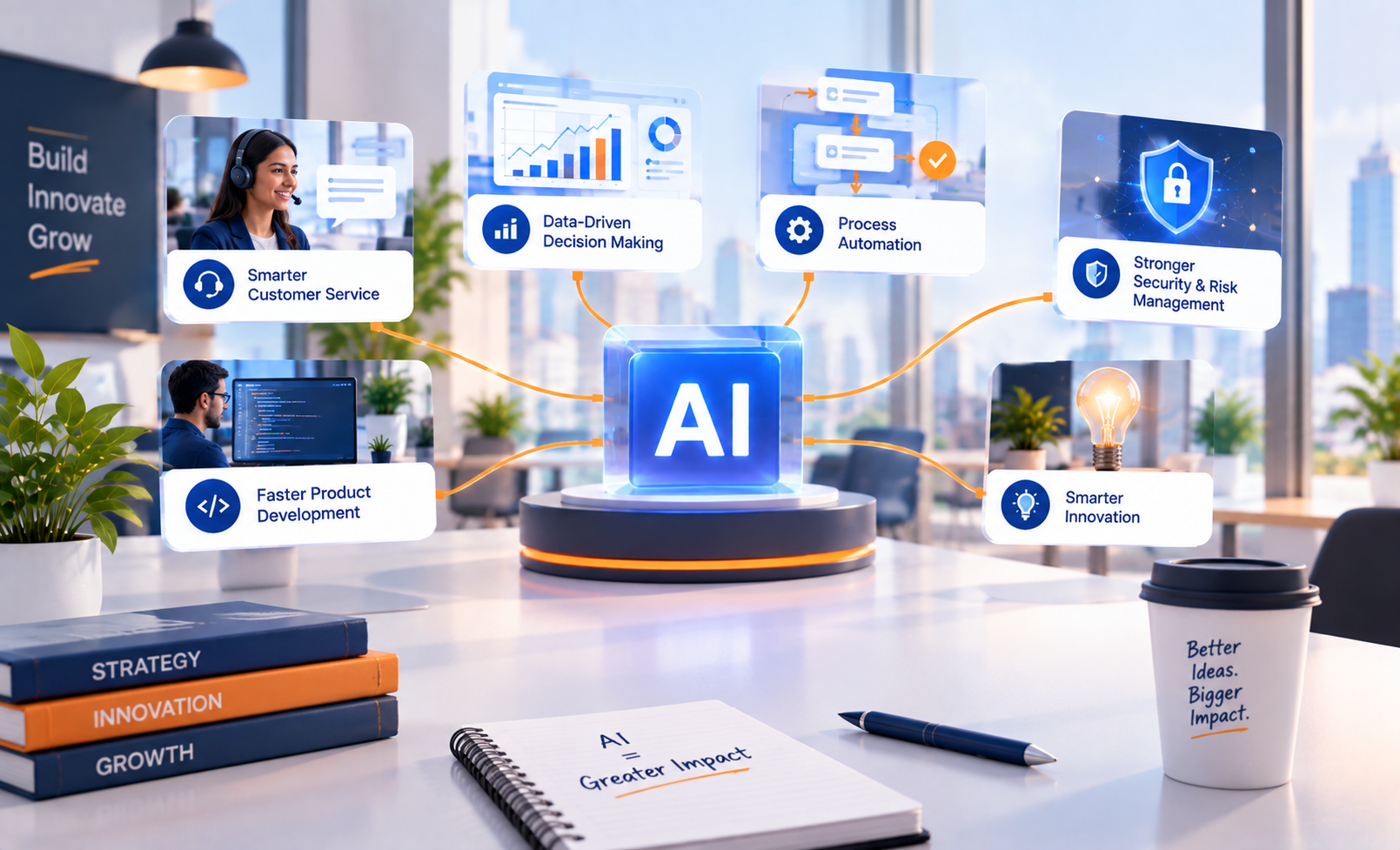
The Top 8 Enterprise AI Use Cases
Our ranking reflects how consistently the evidence shows each use case working, drawing mainly on McKinsey and IBM data.
Software engineering
Coding agents are scaling at about two in ten organizations, and 31% of larger enterprises. Nearly a third of respondents (32%) have decided against buying software because they could build it in-house
IT service and operations
IT is among the three functions where agents are most often scaled. Ticket triage, incident summaries, and access requests are structured, high-volume, and easy to measure
Knowledge assistants
Chatbots are the most widely scaled AI tool (47% of organizations), and knowledge management is another top function for agents. Grounding answers in your own documents through retrieval-augmented generation (RAG) keeps them verifiable. IBM's internal AskHR agent handles over 2.1 million employee conversations a year
Customer service
Service operations is among the functions where respondents most often report cost reductions. IBM reports one telecom cut pre- and post-call work by 30%, saving an estimated $5 million a year by summarizing calls and updating the CRM automatically
Document processing
Contracts, invoices, applications, and forms are the unglamorous workhorse: extraction, classification, summarization, and routing, with a human reviewing exceptions
Finance and procurement
IBM's Institute for Business Value found a median 8% reduction in total finance cost for robust deployments, rising to 18% when AI is built into end-to-end processes like procure-to-pay and order-to-cash
Supply chain and manufacturing
Both rank among the top areas for reported cost reductions, from demand forecasting to predictive maintenance and quality inspection
Marketing and sales
Respondents most often attribute revenue gains here, from lead analysis and personalization to content assistance
Enterprise AI Use Cases by Industry
The best use case depends on how much data an industry has, how regulated it is, and what a mistake costs.
Financial services: Fraud and risk screening, claims and dispute handling, and compliance document review lead here. Because decisions carry legal and financial weight, people approve the high-impact ones.
Public sector: Agencies focus on drafting and processing documents, summarizing records, and answering resident inquiries. Human review stays in place wherever accountability matters.
Higher education: Student and staff support, admissions and administrative workflows, and internal knowledge assistants offer the clearest wins, because they cut routine workload without touching academic judgment.
Aerospace and defense: McKinsey notes that advanced manufacturers, including aerospace, use agents in supply chain and production. In compliance-heavy programs, forecasting and exception handling tend to come before anything touching certified systems.
Where Each Use Case Struggles
| Use case | Best first step | Common failure |
|---|---|---|
| Software engineering | Code review and test generation | Token costs outpace value |
| IT operations | Ticket triage and summaries | Agent actions without permission limits |
| Knowledge assistants | One approved content set | Outdated documents, confident wrong answers |
| Customer service | Agent-assist, not full automation | Poor handoff to humans |
| Document processing | One high-volume document type | Messy scans, no review step |
| Finance and procurement | Invoice and exception handling | Automating a broken process |
| Supply chain and manufacturing | Forecasting and exception alerts | Fragmented data across systems |
| Marketing and sales | Research and drafting support | Generic output, no measured lift |
The Gap Nobody Puts in the Deck
Individual productivity is real, but it has not become profit for most. The share reporting EBIT impact is flat at 37%, and only about 6% qualify as AI high performers. One in five say AI operating costs, including tokens, already limit their use. Gartner predicts over 40% of agentic AI projects will be canceled by the end of 2027 over cost, unclear value, or weak risk controls.
What separates high performers is not a better model. Nearly three-quarters fundamentally redesign workflows around AI, versus about a quarter of everyone else.
How to Choose Your First Use Case
Ask three questions. Is the data ready? A solid cloud and data foundation comes first. Does it connect to the systems people use? Agents that cannot reach your CRM or ERP stay demos, which is where ERP, CRM and integration work pays off. Can you name one metric? Cycle time, cost per ticket, or hours saved, set before launch.
Start narrow, keep a human approving consequential actions, and measure against the baseline. To prioritize and build, talk to Sparient's AI & Analytics team.